
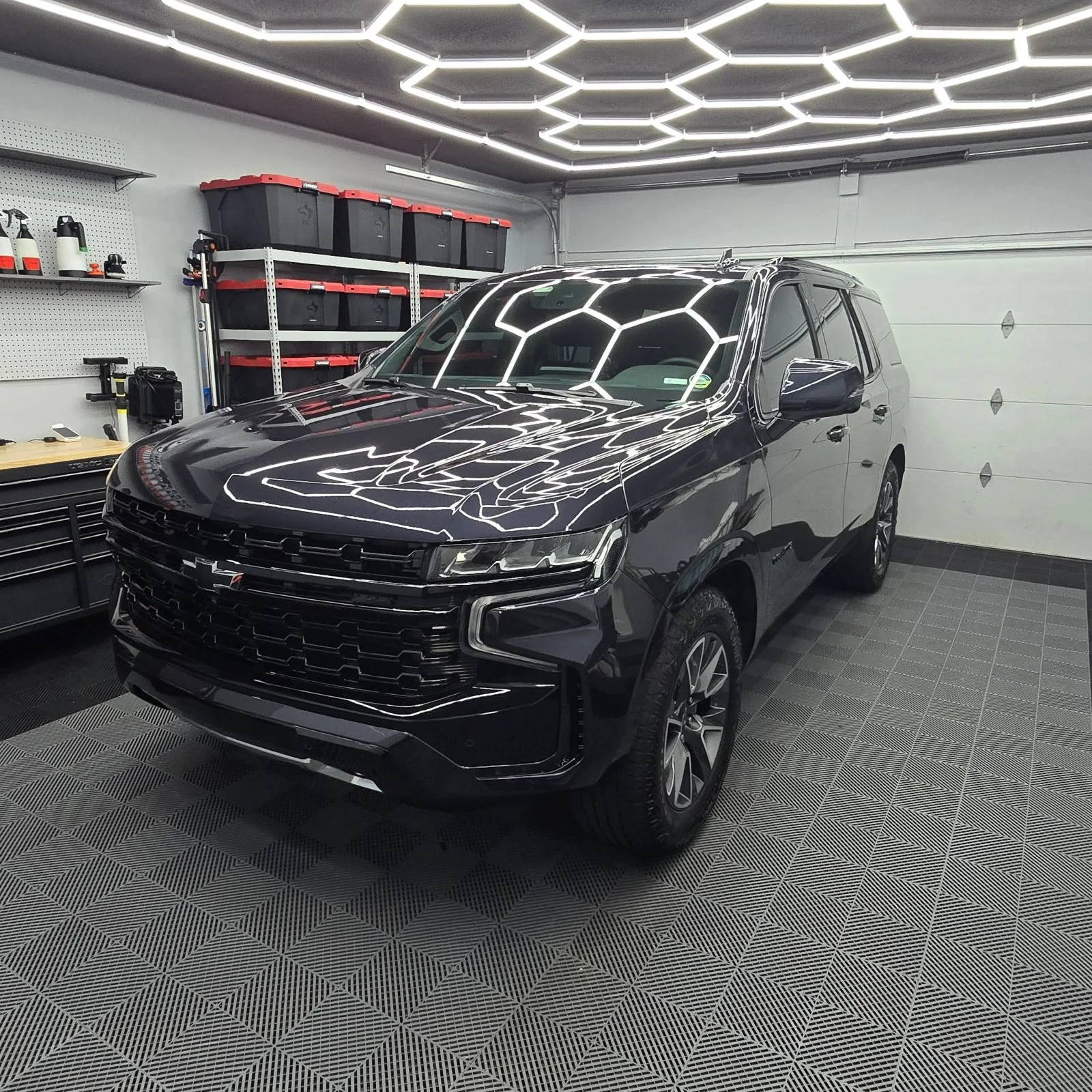
Aftercare Guidelines for Ceramic Coating
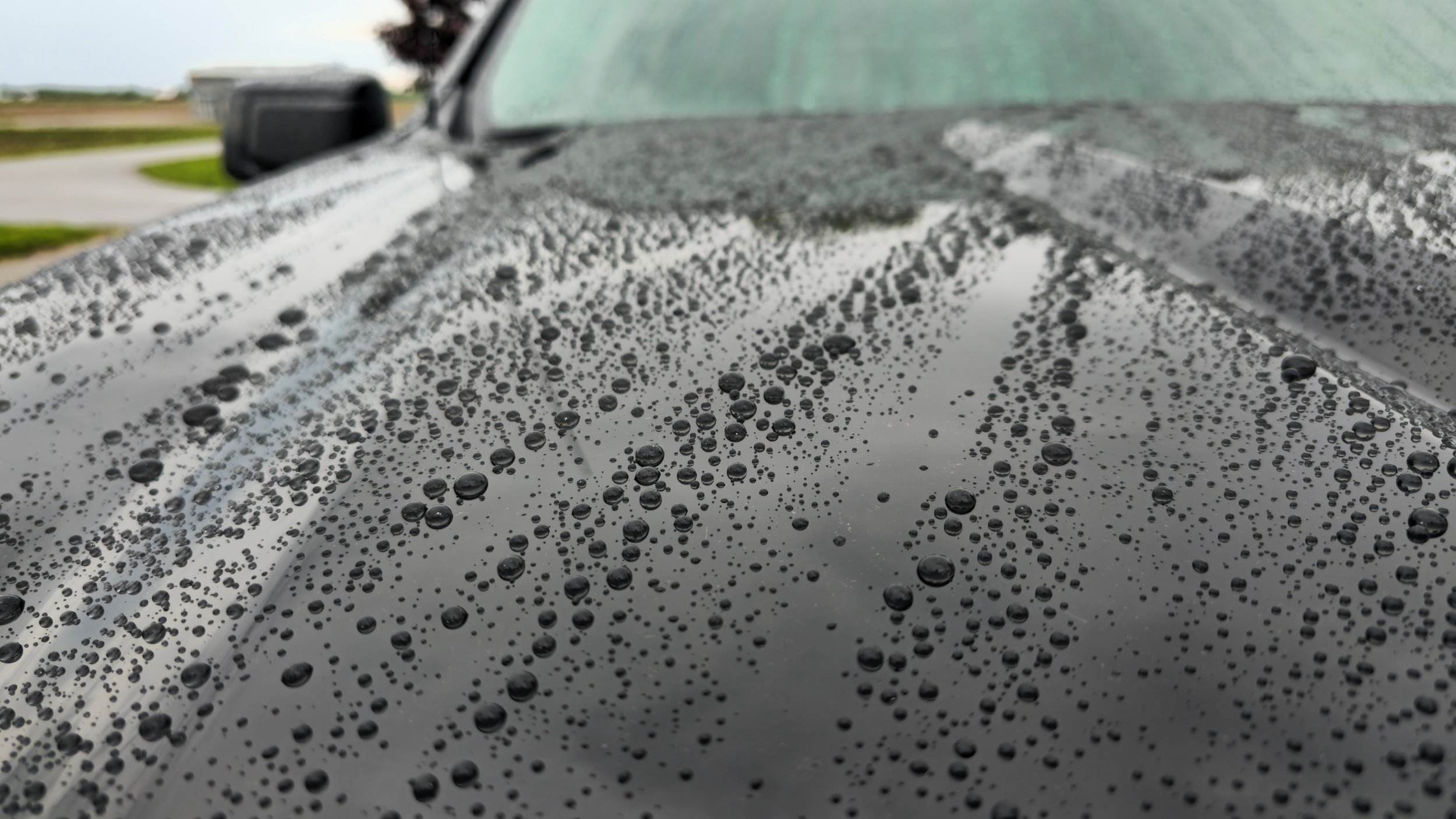
Ceramic coatings offer incredible protection and cleanliness from environmental contaminants.
Proper care will ensure the coating maintains its performance and longevity, so that the surfaces underneath stay protected and looking great.
Improper care or extreme use can degrade the coating and shorten its lifespan.
In a nutshell:
Hand-wash every two weeks using a pH-neutral soap without added wax. Avoid tunnel washes with brushes or cloth, and use touchless auto washes sparingly.
Use spotless water for rinsing and air-dry with blowers, or immediately dry with a 70/30 blend microfiber drying towel.
Remove bird droppings as soon as possible with a detail spray and microfiber towel.
Use specialized cleaners to soften Bug/Sap/Tar before wiping.
Use a coating decontamination soap to “unclog” the surface as needed, typically after the winter months if exposed to salt.
Schedule with NeatFreak to handle the specialized decontamination and recoating.
Regular Gentle Washing
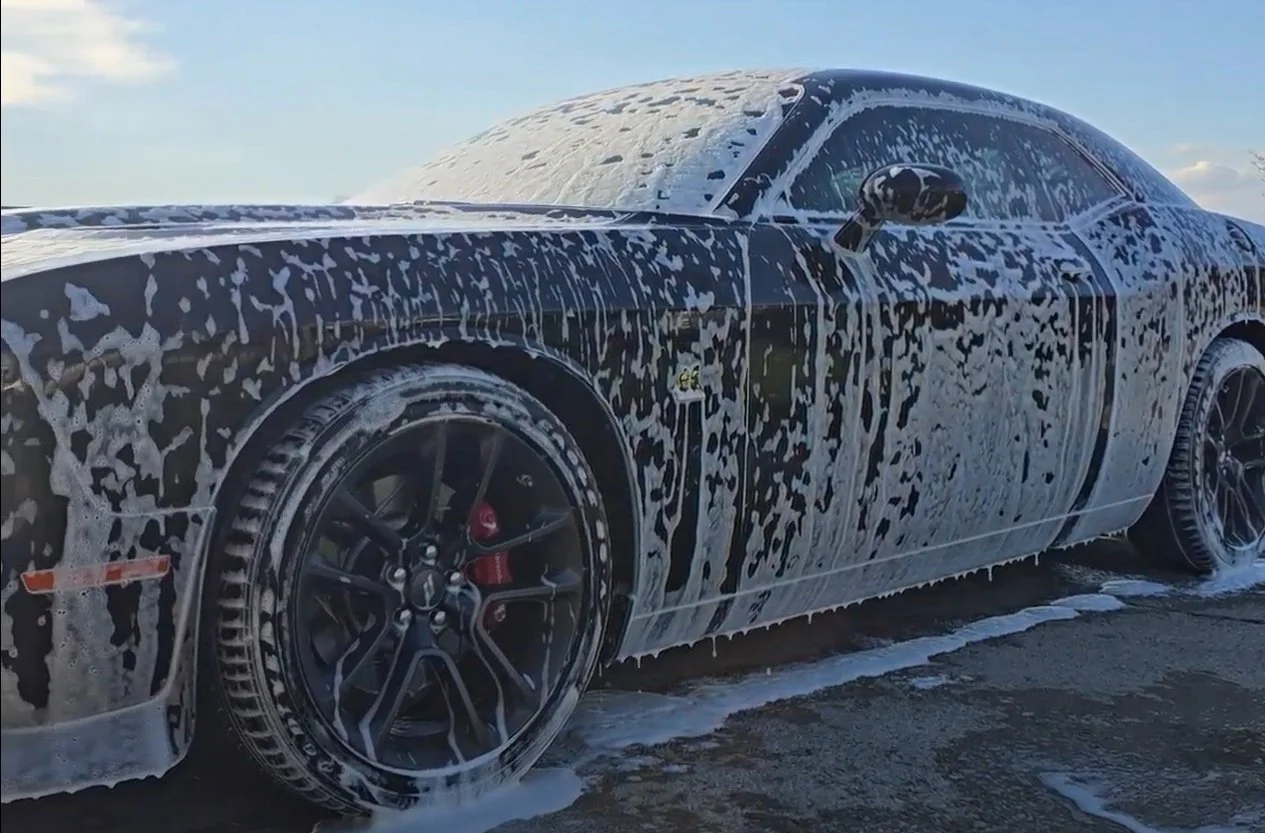
On average, it is recommended to wash the vehicle every two weeks or ~500 miles. A long road trip, for example, will expose the car to a lot of road grime in a short amount of time, compared to sitting in a protected garage.
It is important to avoid low-pH acids or high-pH caustics when washing, and stick to using a pH-neutral soap. This can be used as a pre-soak that breaks down dirt and rinses away before the contact wash. For heavy bug splatter, a bug remover can be applied underneath the pre-soak. Avoid acid-based wheel cleaners, coated wheels clean very easily with pH-neutral soaps. Wash the vehicle in moderate temperatures, avoiding full-sun or high winds if possible.
Use a soft and clean microfiber mitt/towel in straight line motions to agitate and lift grime from the surface. Avoid using pressure as this can cause scratching. The ceramic coating will release the dirt easily. A non-coated car would require harsher chemicals or agitation to get the same result. We recommend using the “no-bucket” method, which means you do not rinse the mitt between panels. Instead of rinsing, we fold and flip the towel to a clean side. Using a 16”x16” microfiber, you can fold the towel in half two times, to get a folded 8”x8”. Flipping and folding will allow eight clean surfaces before needing to grab a new towel. This will typically require 3-4 towels depending on the size of the vehicle.
After the contact wash, rinsing the soap should ideally be performed with filtered water to avoid mineral buildup. There are deionizing filters designed for on-demand spotless rinsing. Another option is to use a Reverse Osmosis filter with a large storage tank. If using spotless water, the vehicle can be air-dried using handheld blowers, eliminating the need to use a drying towel.
If not using spotless water, it is important to remove the water before it dries. If possible, pull the car into a shaded garage immediately after rinsing to slow down evaporation. We recommend blow drying flat panels and crevices quickly, followed by a plush 70/30 blend microfiber drying towel to remove the majority of the water. Follow-up with a plush microfiber and detailing spray to remove the rest of the water and any water spots that may have formed. If the water is drying too quickly due to wind/temperature, a rinseless wash soap can be used as a drying aid, without clogging the microfiber towel.
Since the car has a ceramic coating, waxing is not needed, but a maintenance spray can help the coating, acting as a second line of defense. There are many types of products that can be used for this, we like to use a ceramic-boosting detail spray which is also great for streak-free glass.
Tree Sap & Bugs
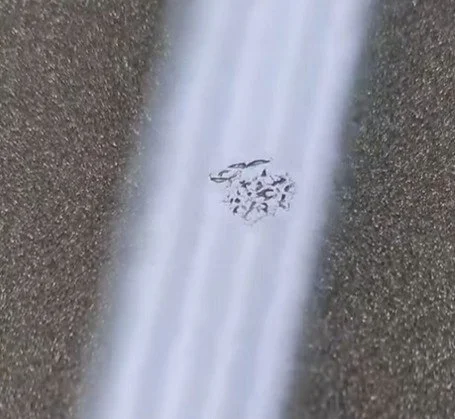
The picture here shows damage from a drop of pine tree sap. The paint is distorted, cracked, and permanently damaged. Ceramic coatings provide a layer of protection from these, but can still get stained and etched themselves if not removed in a timely fashion. The enzymes and acids in bug splatter can cause similar damage, as well as sticky tar from road work.
It is important to remove bird droppings as soon as possible. Keeping a detailing spray and microfiber in the car makes it easy to spot-clean smaller messes on-the-go.
If you notice bug splatter, tree sap, or tar that isn’t removed by the regular wash process, a dedicated Bug/Tar/Sap Remover is needed to safely soften the buildup before lifting away. Follow up with a ceramic detail wipe to remove any remaining chemical and protect the surface.
Seasonal Maintenance
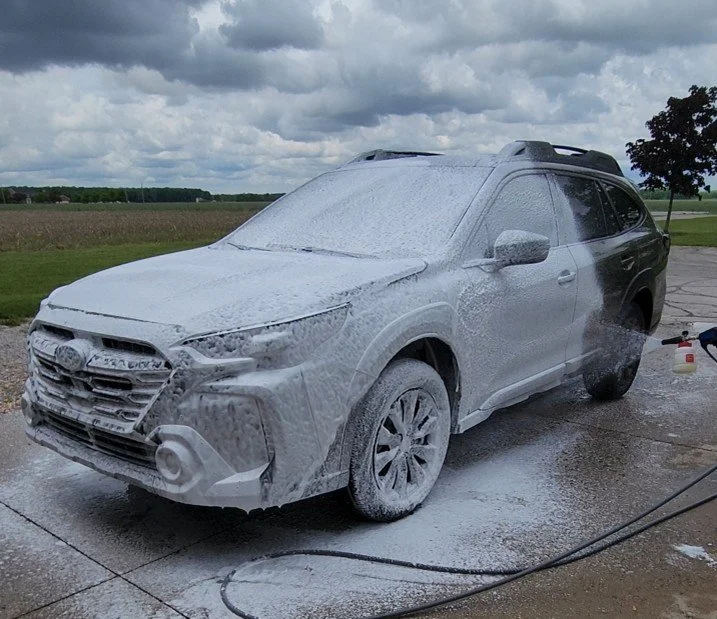
Once or twice per year, it is recommended to use a special soap to “unclog” the micro structure of the coating’s surface.
Mineral buildup can occur from non-pure water drying on the surface, leaving behind deposits that regular washing cannot remove. This takes a while to buildup, but is most commonly seen after the winter season where salts are used to de-ice the roads. Using a specific decontamination soap is used to break down the salt buildup and unclog the surface, restoring the hydrophobics and self-cleaning.
Brake dust and iron fallout are also stubborn to remove with regular washing. Iron removers will safely dissolve this type of buildup, but are expensive and should be used on an as-needed basis.
After unclogging the coating, inspect to see if any panels are not performing as well and plan to reapply the coating to those areas. This typically happens on the front doors, down low behind the drive wheels.
While it is not necessary, it can be beneficial to apply a paint sealant to help act as a temporary sacrificial layer.
Performing all of the recommended maintenance will ensure your coating continues to make the wash process easy and effective. A non-coated vehicle would require much more chemical, agitation, polishing, waxing, and work to maintain over the years.
Schedule a Maintenance Detail by Completing The Form Below, or Call Us